Showing posts with label best practices. Show all posts

Thursday, September 2, 2010

Scanners May Be Your Only Option To Know If Help Is On The Way

In CERT, we learn "Following a major disaster, first responders who provide fire and medical services will not be able to meet the demand for these services. Factors as number of victims, communication failures, and road blockages will prevent people from accessing emergency services they have come to expect at a moment's notice through 911. People will have to rely on each other for help in order to meet their immediate life saving and life sustaining needs." (www.citizencorps.gov/cert/about)

You call 911 and you are unable to get through. How do you know if help is arriving and how bad is the situation?

One option is to find your local emergency agency on a scanner. The following website provides live feeds from across the country.


For additional tips, visit http://www.facebook.com/citizencorps

Friday, September 19, 2008

Religious Best Practices - Where Do We Go From Here?

One of the focuses of Neighbors Helping Neighbors during National Preparedness Month 2008, has been around children awareness and readiness.

From discussions on Landline, Cellphone, Email to providing a Crisis Management Plan Template from a local school district.

These suggestions apply to pre-schools, K-12, and universities. They also can be leveraged in religious organizations and the workplace.

As we look at religious organizations, there is the concept of
Ready Interfaith TM

There are quite a few religious based websites that provide additional guidance on preparedness, grant/funding options, and best practices/checklists from other organizations.

One organization is the Secure Community Network (SCN). And while this website focuses on one religion, there are best practices that can be leveraged across faiths.

http://www.scnus.org/

Another resource is the Christian Emergency Network.

Friday, August 22, 2008

Final Training Class Or The Beginning

How does one know if they have made an impact?

After all the hours and hours of training sessions, exercises, discussions, etc., can one be so sure that the messages that we brought to the region will be continued once we leave.

Were our Train-the-trainer sessions effective?

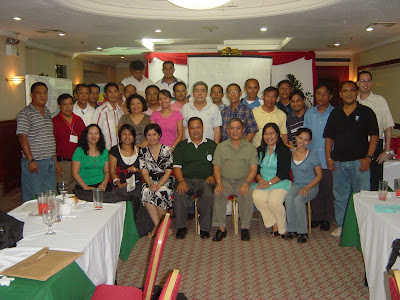
During the last week in the region, we had the opportunity to see first hand, as two instructors enhanced their material with content that was provided during the training and exercise evaluation we delivered over the past month.

But the impact was more than that. When attending the planning session at the ports, a few weeks ago, there was some concern on my part as to the true readiness for a full-scale exercise.


There is no question, that steps are now in place to ensure they will be ready and that all the agencies will be able to work together. A team that will successfully operate under the Incident Command System (ICS) structure.


The Contingency Planng and Incident Command System (ICS) Training for BEST on CIQS* demonstrated just that, were we had the opportunity to participate in the training session and evaluate two tabletop exercises (Seaport Hazmat Spill and Airport Bombing).

But this did not have just an impact on Region XI, but other areas as well. Through a grant from Australia, these instructors will also be presenting their newly enhanced material at:

  • Cotabato (ARMM)
  • Palawan (Region IV)
  • Zambanga (Region IX)
  • Cagayan de Oro City (Region X)
  • General Santos City (Region XII)
*BEST - BIMP (Bruei Darussalam Indonesia Malaysia Philippines) EAGA (East Asia Growth Area) Support Team
*CIQS - Customs, Immigration, Quarantine and Security


It was interesting to see that Asia Pacific appears to place a greater focus on Quarantine compared to other more developed regions.

Saturday, July 5, 2008

Taking National Preparedness Month Across Borders - Showcase Ontario

http://www.showcaseontario.com/2008/

During National Preparedness Month, Andrew Levy, upon his return from the IBM Corporate Service Corps project, will go beyond United States borders again and share lessons learned and best practices from multiple countries.

As part of this years theme, "Working Together - Working Smarter", participants will leave this featured presentation with:

1. Increased knowledge of how to leverage citizen groups for emergency response.
2. Understand ways to reduce load on Government during an emergency.
3. Learn how to reduce redundancy in public and private emergency programmes.
4. Be able to increase citizen participation in emergency simulations.

Last month, Andrew spoke at the World Conference on Disaster Management in Toronto, Canada, where he was asked to return to speak to this audience.